The T.E.E guide
Lightweight or heavyweight: what changes?
Within T.E.E, Lightweight tee uses 265 gsm fabric and Heavy pocket tee uses 285 gsm fabric. They also have different proportions and surface descriptions. Choose between them by considering fabric weight, feel and cut together, rather than assuming that weight describes the entire wearing experience.
How much difference is there in fabric weight?
The difference is 20 grams per square metre of fabric. Balanced tee sits between them at 272 gsm. These are fabric specifications, not weights for the finished garments, and they do not measure thermal comfort.
Lightweight and max-weight are the names used within this three-tee collection. They are relative descriptions here, rather than a universal grading system for every T-shirt sold elsewhere. Read the actual number when comparing different brands.
How do the fabric descriptions differ?
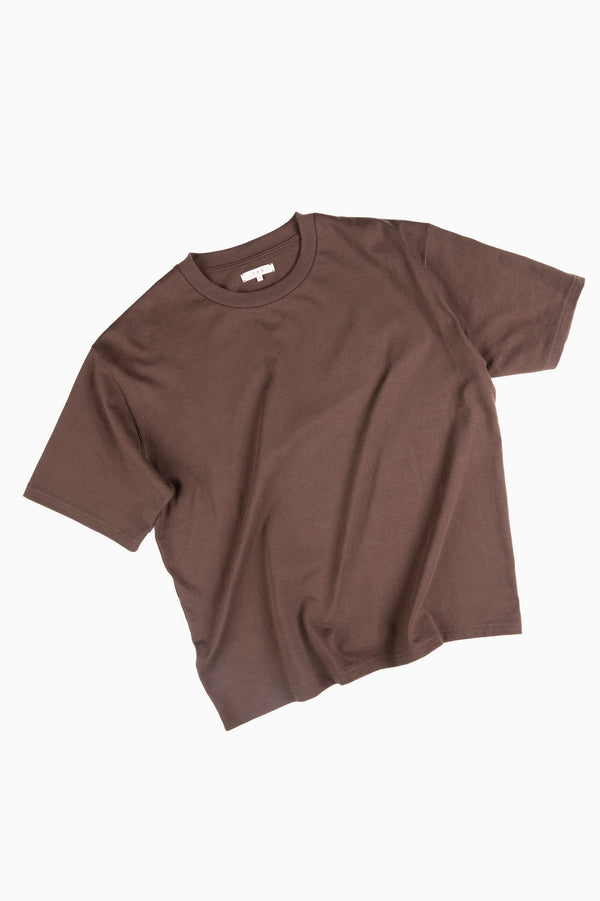
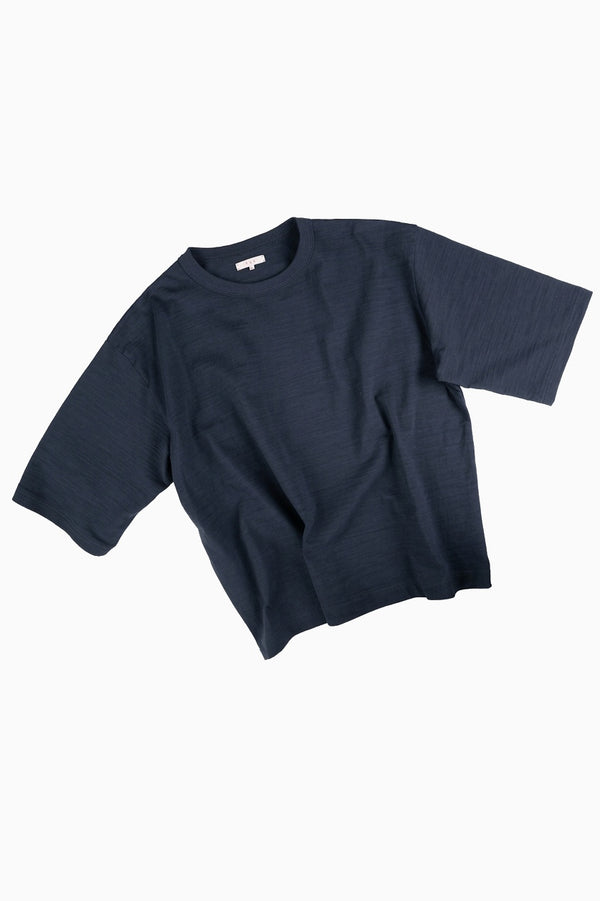
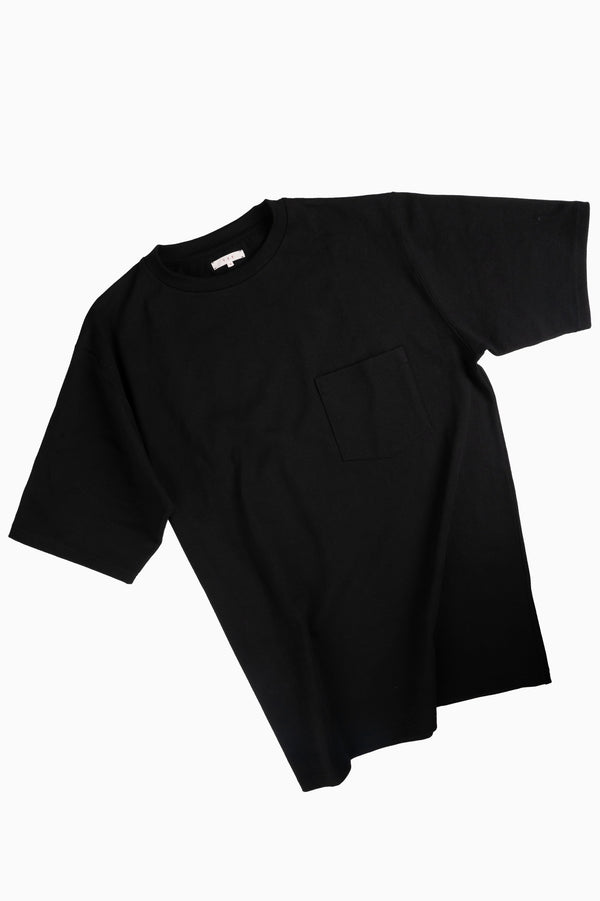
Lightweight tee is described as subtly textured jersey, pre-washed for a lived-in feel. Heavy pocket tee is described as smooth and silken with a subtle natural sheen. Balanced tee offers a moderately firm, dry hand with a soft drape.
Hand describes the way fabric feels to touch. A smooth surface does not automatically mean a lighter fabric, and a dry surface does not necessarily mean a stiffer garment in every situation. The product descriptions give you vocabulary for deciding which character appeals to you.
Why is fit part of this comparison?
The 265 gsm tee has a cropped, boxy silhouette; the 285 gsm tee has a longer, relaxed silhouette. In size M, their listed body lengths are 69 cm and 80 cm respectively. Their chest widths are 65.5 cm and 61 cm.
If you want a wider, shorter outline, the boxy cut may be more relevant than the 20 gsm difference. If you want a longer hem position, Heavy pocket tee provides a different starting shape. Neither choice requires assuming that a higher weight is better.
Which should you choose for everyday wear?
Choose the combination that matches your use. Start with the desired hem position and width, then consider whether you prefer a textured, dry or smoother fabric character. Review the full size chart and your usual layering habits before selecting a size.
For warm conditions, weight alone is not enough to predict comfort. For layering, also consider the dimensions of the outer garment. T.E.E does not publish comparative cooling or wear-life test results for these tees, so this guide compares their stated specifications rather than assigning a performance winner.